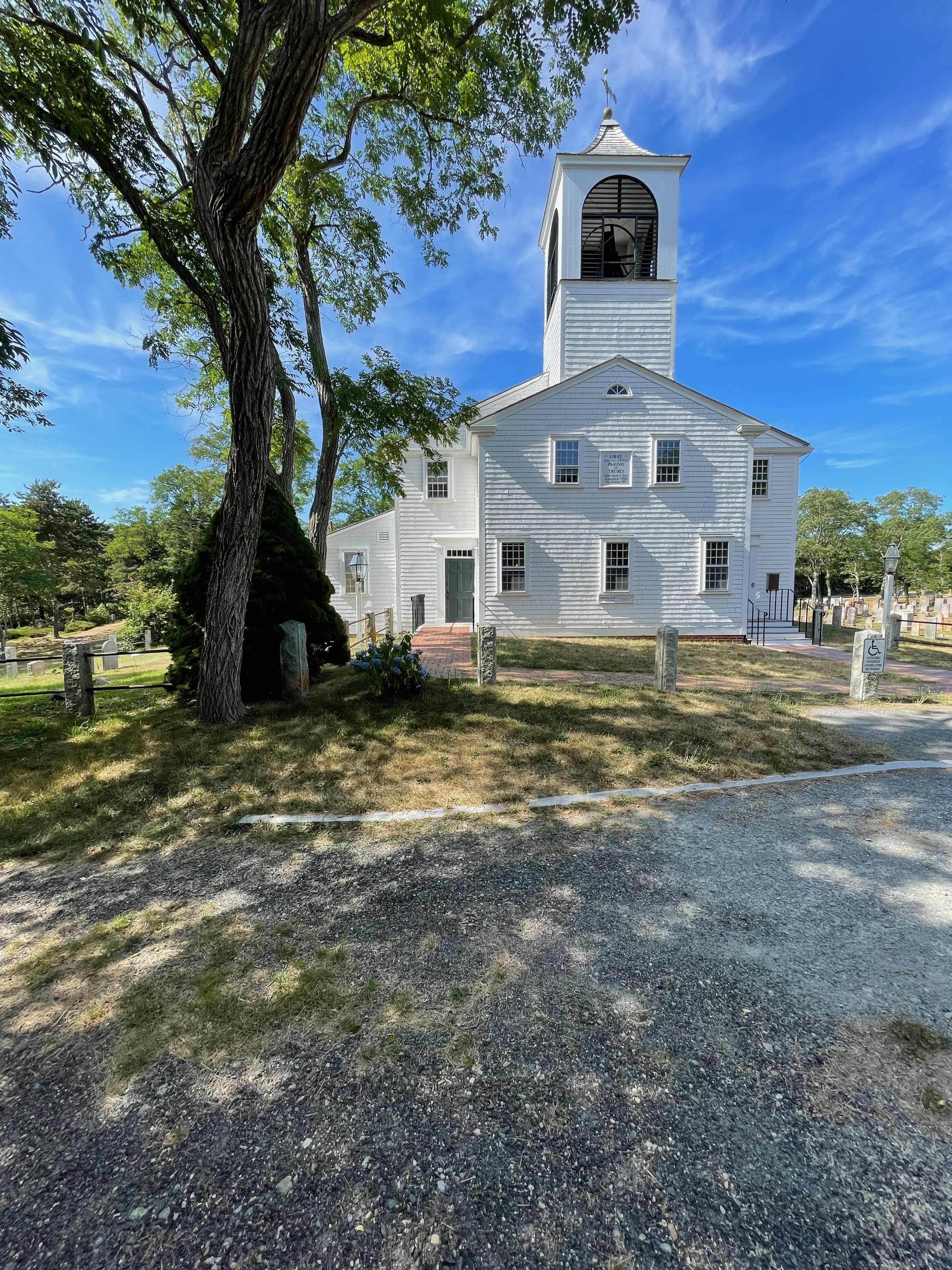
Truro First Parish Meeting House
I’ve been researching the Truro Methodists, but by chance I was invited inside the First Parish Meeting House. I was there yesterday to make a preliminary drawing for a painting I’ve been planning when the moderator of the church invited me inside to take a look.
First Parish is a Congregational Church — meaning the its parishioners were responsible for the business and governance of their church. I grew up Congregationalist, so the plainspoken design of the meeting house feels familiar. This is First Parish’s third meeting house — the first two (1709 and 1720) having been at their original site, on the Hill of Storms in North Truro (affiliated with the North Burial Ground, across from today’s Seaman’s Bank). When commerce and prosperity moved south, to Truro Center and Pamet Harbor, the church followed in 1827. In addition to worship, the building held Town Meeting until 1860, when Truro purchased Town Hall. The building was placed on the National Register of Historic Places in 2014.

View from under the western gallery.
The building is classic New England vernacular architecture, with the builder — Solomon Davis — also serving as the architect. It’s a hybrid Federal/Greek Revival building. This parish is the descendent of the Puritan/Calvinist Church of colonial New England. As such, there is no central door or central aisle — both architectural protests against the effrontery associated with showy processions of Catholicism. The pews on the main floor have doors on them — to fight drafts in winter. The balconies have plain benches. There are no cushions. Excessive comfort being a no-no in Calvinist theology.

Stairs to the eastern gallery.
There have been very few alterations to the building. The exceptions being that in 1845, a vestry was built under the steeple, shortening the main body of the church. It’s believed at about the same time the pulpit was lowered, the balconies no longer being filled (because the Methodists — more on them soon — had taken Truro by storm by the 1840s!).
Surrounding the Meeting House is the affiliated Congregational grave yard. Its earliest known burial was 1810. It contains a memorial to the 57 Truro residents and seven ships lost in a storm on October 3. 1841. This graveyard is adjacent to the independently created and maintained Snow Cemetery.
The Friends of the Truro Meeting House have a robust schedule of summer events.

The entry with stairs to the eastern gallery.
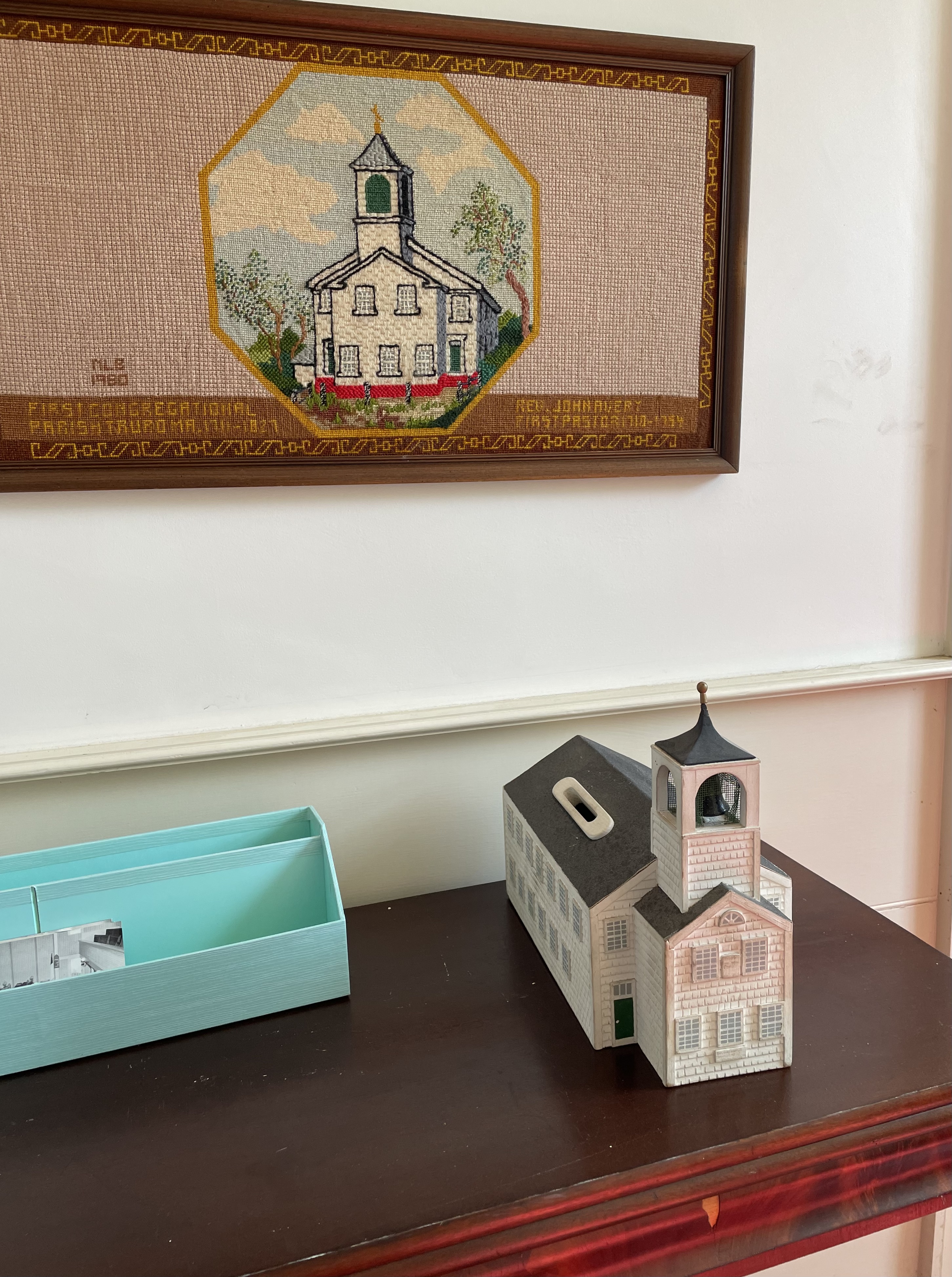
Vernacular artworks commemorating the Meeting House.
 Field Guide: Walking & Painting on Cape Cod
<
div dir=”ltr”>I saw David Corn speak there and absolutely fell
LikeLike